Instant Connection for Pixel Streaming
— New Feature Automated Setup
Best Apps for Digital Art
DigitalArt
-
Best Apps for Digital Art
DigitalArt
Best Apps for Digital Art
DigitalArt
-
Table of Contents
It doesn’t matter if you’ve already established your work as a digital artist, or if you’ve been just playing with the idea to create your own digital art: The right program is the key component to your success. There are many different programs out there that can help you to master your digital creation, but do they suit you and your intentions? We’ve done the research for you and collected a list of the best apps for digital art including unique features, pros, cons, hardware requirements, and prices.
#1. Blender
Blender is open-source software that is primarily focused on the creation of 3D graphics. As used for motion graphics, 3D designs, virtual reality architecture, and animations, Blender is a super intuitive program and so equally suited for beginners and absolute pros in the industry.
Software Requirements
8 GB RAM
Graphic card with 2 GB RAM
64-bit quad-core CPU
Why Use Blender?
As open-source software, it’s completely free.
Great for beginners.
Infinite resources and tutorials from the community.
Why Avoid Blender?
Steep learning curve can be challenging.
Very basic video editor.
Struggles on devices older than 10 years.
#2. Adobe Photoshop
Who doesn’t know the most famous app for photo editing out there? Photoshop from Adobe supports you with every single tool you need to create astonishing art pieces. Photoshop is optimized for drawing, photo fusion, and manual painting. Moreover, the Adobe Cloud allows you to use Photoshop on all your devices and Adobe even created its own apps for those! If you’re a professional creator, Photoshop is surely the way to go.
Software Requirements
16 GB RAM recommended
Graphic card with 4 GB of GPU memory
Intel processor with 64-bit support
Why Use Photoshop?
Full support on tablets with graphic pens.
Supports all file formats.
Most effective tools for color corrections and manipulations.
Why Avoid Photoshop?
No vector editor.
You need a monthly subscription starting at $9.99 per month.
The massive number of tools can be confusing for beginners.
#3. Affinity Photo
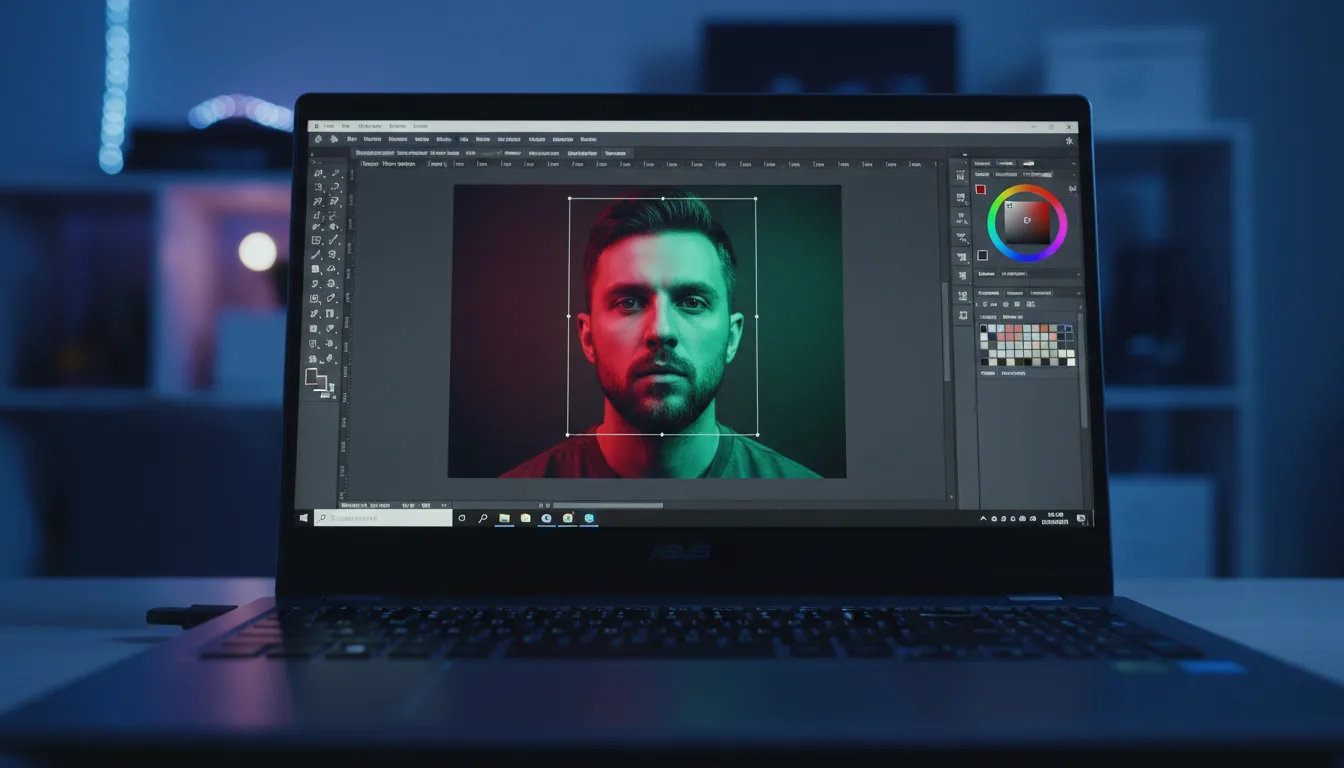
Affinity Photo is after Photoshop the most dominant application out there. If a monthly subscription like Photoshop is not for you, Affinity Photo is definitely the best alternative out there. The interface is quite similar to Photoshop, and most professionals move to Affinity Photo after a while.
Software Requirements
2 GB RAM
Graphic card with M1 chip or Intel processor
64-bit support
Why Use Affinity Photo?
Not monthly subscription, one-time cost of $54.99.
Total compatibility with Photoshop files.
Very intuitive learning.
Why Avoid Affinity Photo?
No image-organizing tool.
Lacking mobile app for editing.
No automatic background removal tool.
#4. Rebelle 5
If it’s your aim to create realistic paintings in watercolor or acrylic style, Rebelle 5 is your top application for digital art. As one of the best (and cheapest) software for realistic digital paintings out there, Rebelle 5 comes with more than 170 brushes that help you to design remarkable watercolor and oil paintings.
Software Requirements
16 GB RAM
Graphic card with M1 chip or graphic card with 2 GB
64-bit or 32-bit support
Why Use Rebelle 5?
Only a one-time cost of $89.99.
Most realistic digital painting experience.
Regular updates with new features.
Why Avoid Rebelle 5?
Very slow on older hardware.
Doesn’t hold many features for photo editing.
Needs a graphic pen for best performance.
#5. Corel Painter
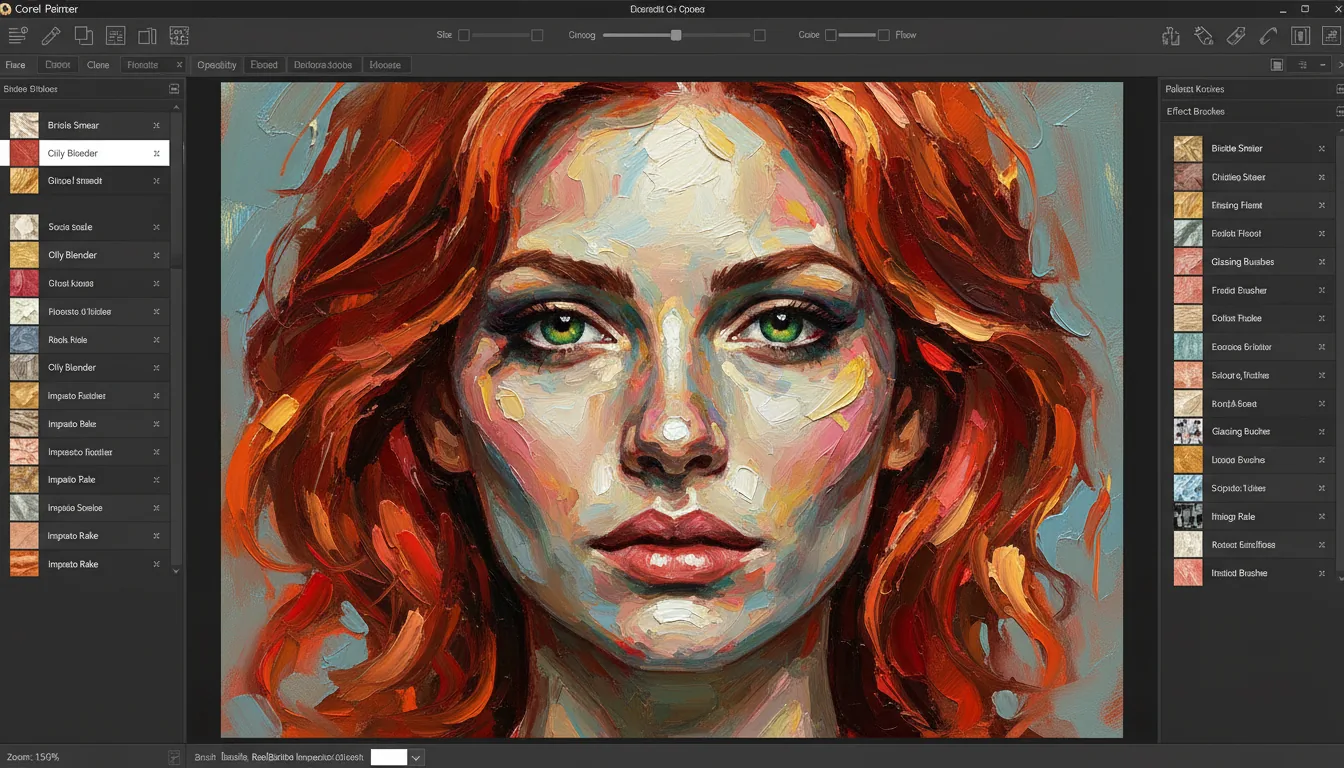
Corel Painter is a professional-grade digital painting software that’s highly respected among illustrators, concept artists, and fine art creators. Known for its vast library of realistic brushes and textures, Painter aims to replicate the feel of traditional media while giving artists the flexibility of digital tools. It’s especially powerful for those who want to merge digital techniques with a natural, hand-painted look.
Software Requirements
8 GB RAM (16 GB recommended)
Multi-core Intel or AMD processor with 64-bit support
GPU with OpenCL 1.2 support
Why Use Corel Painter?
It offers some of the most realistic brush behavior on the market, with highly customizable settings.
The interface is artist-friendly and focused on painting, with a huge range of paper textures and media types.
Great for illustrators who want an organic look while working digitally.
Why Avoid Corel Painter?
It’s relatively expensive, with a one-time cost starting at $199 (or annual subscription).
The learning curve can be steep for beginners, and it’s heavier on system resources compared to some other painting apps.
What Are the Best Apps for Digital Art?
There’s no one-size-fits-all answer here, the “best” app depends entirely on your creative goals. If you mainly work with photo compositions, Photoshop or Affinity Photo will serve you well. Want to dive into 3D modeling and animation? Blender is the way to go. Prefer translating your authentic hand-painted style into the digital world? Rebelle 5 offers a wonderfully realistic painting experience. And if you want professional-grade tools with one of the most extensive brush libraries available, Corel Painter is a strong choice for illustrators and concept artists.
Once you know your artistic direction, it’s much easier to choose the software that fits, and from there, you’ll have everything you need to create your best work.
FAQs
1. Which app is best for beginners in digital art?
If you’re just starting out, Blender (for 3D) and Affinity Photo (for image editing) are great entry points. Blender is free and widely supported by tutorials, while Affinity Photo offers professional tools without a subscription.
2. Do I need a powerful computer to use these apps?
It depends on the app. Photoshop and Affinity Photo can run on mid-range machines, but 3D apps like Blender and high-performance painting tools like Corel Painter benefit from more RAM, a strong CPU, and a capable GPU.
3. Are there free options for digital art?
Yes! Blender is completely free, and some alternative open-source or freemium apps exist. However, premium apps like Photoshop, Rebelle 5, or Corel Painter offer specialized features worth investing in.
4. Which software is best for realistic painting?
Rebelle 5 and Corel Painter are both excellent for simulating traditional media like watercolor, oil, or acrylic, with realistic brush behavior and texture effects.
5. Can I use these apps on a tablet or iPad?
Photoshop has a dedicated iPad version, and Affinity Photo works on iPad as well. Rebelle 5, Blender, and Corel Painter are desktop-focused but can be used on a tablet with pen support if your device meets their hardware requirements.
It doesn’t matter if you’ve already established your work as a digital artist, or if you’ve been just playing with the idea to create your own digital art: The right program is the key component to your success. There are many different programs out there that can help you to master your digital creation, but do they suit you and your intentions? We’ve done the research for you and collected a list of the best apps for digital art including unique features, pros, cons, hardware requirements, and prices.
#1. Blender
Blender is open-source software that is primarily focused on the creation of 3D graphics. As used for motion graphics, 3D designs, virtual reality architecture, and animations, Blender is a super intuitive program and so equally suited for beginners and absolute pros in the industry.
Software Requirements
8 GB RAM
Graphic card with 2 GB RAM
64-bit quad-core CPU
Why Use Blender?
As open-source software, it’s completely free.
Great for beginners.
Infinite resources and tutorials from the community.
Why Avoid Blender?
Steep learning curve can be challenging.
Very basic video editor.
Struggles on devices older than 10 years.
#2. Adobe Photoshop
Who doesn’t know the most famous app for photo editing out there? Photoshop from Adobe supports you with every single tool you need to create astonishing art pieces. Photoshop is optimized for drawing, photo fusion, and manual painting. Moreover, the Adobe Cloud allows you to use Photoshop on all your devices and Adobe even created its own apps for those! If you’re a professional creator, Photoshop is surely the way to go.
Software Requirements
16 GB RAM recommended
Graphic card with 4 GB of GPU memory
Intel processor with 64-bit support
Why Use Photoshop?
Full support on tablets with graphic pens.
Supports all file formats.
Most effective tools for color corrections and manipulations.
Why Avoid Photoshop?
No vector editor.
You need a monthly subscription starting at $9.99 per month.
The massive number of tools can be confusing for beginners.
#3. Affinity Photo
Affinity Photo is after Photoshop the most dominant application out there. If a monthly subscription like Photoshop is not for you, Affinity Photo is definitely the best alternative out there. The interface is quite similar to Photoshop, and most professionals move to Affinity Photo after a while.
Software Requirements
2 GB RAM
Graphic card with M1 chip or Intel processor
64-bit support
Why Use Affinity Photo?
Not monthly subscription, one-time cost of $54.99.
Total compatibility with Photoshop files.
Very intuitive learning.
Why Avoid Affinity Photo?
No image-organizing tool.
Lacking mobile app for editing.
No automatic background removal tool.
#4. Rebelle 5
If it’s your aim to create realistic paintings in watercolor or acrylic style, Rebelle 5 is your top application for digital art. As one of the best (and cheapest) software for realistic digital paintings out there, Rebelle 5 comes with more than 170 brushes that help you to design remarkable watercolor and oil paintings.
Software Requirements
16 GB RAM
Graphic card with M1 chip or graphic card with 2 GB
64-bit or 32-bit support
Why Use Rebelle 5?
Only a one-time cost of $89.99.
Most realistic digital painting experience.
Regular updates with new features.
Why Avoid Rebelle 5?
Very slow on older hardware.
Doesn’t hold many features for photo editing.
Needs a graphic pen for best performance.
#5. Corel Painter
Corel Painter is a professional-grade digital painting software that’s highly respected among illustrators, concept artists, and fine art creators. Known for its vast library of realistic brushes and textures, Painter aims to replicate the feel of traditional media while giving artists the flexibility of digital tools. It’s especially powerful for those who want to merge digital techniques with a natural, hand-painted look.
Software Requirements
8 GB RAM (16 GB recommended)
Multi-core Intel or AMD processor with 64-bit support
GPU with OpenCL 1.2 support
Why Use Corel Painter?
It offers some of the most realistic brush behavior on the market, with highly customizable settings.
The interface is artist-friendly and focused on painting, with a huge range of paper textures and media types.
Great for illustrators who want an organic look while working digitally.
Why Avoid Corel Painter?
It’s relatively expensive, with a one-time cost starting at $199 (or annual subscription).
The learning curve can be steep for beginners, and it’s heavier on system resources compared to some other painting apps.
What Are the Best Apps for Digital Art?
There’s no one-size-fits-all answer here, the “best” app depends entirely on your creative goals. If you mainly work with photo compositions, Photoshop or Affinity Photo will serve you well. Want to dive into 3D modeling and animation? Blender is the way to go. Prefer translating your authentic hand-painted style into the digital world? Rebelle 5 offers a wonderfully realistic painting experience. And if you want professional-grade tools with one of the most extensive brush libraries available, Corel Painter is a strong choice for illustrators and concept artists.
Once you know your artistic direction, it’s much easier to choose the software that fits, and from there, you’ll have everything you need to create your best work.
FAQs
1. Which app is best for beginners in digital art?
If you’re just starting out, Blender (for 3D) and Affinity Photo (for image editing) are great entry points. Blender is free and widely supported by tutorials, while Affinity Photo offers professional tools without a subscription.
2. Do I need a powerful computer to use these apps?
It depends on the app. Photoshop and Affinity Photo can run on mid-range machines, but 3D apps like Blender and high-performance painting tools like Corel Painter benefit from more RAM, a strong CPU, and a capable GPU.
3. Are there free options for digital art?
Yes! Blender is completely free, and some alternative open-source or freemium apps exist. However, premium apps like Photoshop, Rebelle 5, or Corel Painter offer specialized features worth investing in.
4. Which software is best for realistic painting?
Rebelle 5 and Corel Painter are both excellent for simulating traditional media like watercolor, oil, or acrylic, with realistic brush behavior and texture effects.
5. Can I use these apps on a tablet or iPad?
Photoshop has a dedicated iPad version, and Affinity Photo works on iPad as well. Rebelle 5, Blender, and Corel Painter are desktop-focused but can be used on a tablet with pen support if your device meets their hardware requirements.
Get Beyond Your Computer Performance
Run applications on your cloud computer with the latest generation hardware. No more crashes or lags.

Trial includes 1 hour usage + 7 days of storage.
Summarize with AI
Ready to focus on your creativity?
Vagon gives you the ability to create & render projects, collaborate, and stream applications with the power of the best hardware.
Vagon Blog
Run heavy applications on any device with
your personal computer on the cloud.
San Francisco, California
Solutions
Vagon Teams
Vagon Streams
Use Cases
Resources
Vagon Blog
How to Use DaVinci Resolve With Codex: MCP & Computer Use
How to Use ComfyUI With Claude: MCP & Computer Use Guide
How to Use Rhino With Codex: MCP & Computer Use Guide
How to Use KiCad With Codex: MCP & Computer Use Guide
How to Use KiCad With Claude: MCP & Computer Use Guide Meta
How to Use FreeCAD With Codex: MCP & Computer Use
How to Use FreeCAD With Claude: MCP & Computer Use
How to Use 3ds Max With Codex: MCP & Computer Use
How to Use Houdini With Claude: MCP & Computer Use
Vagon Blog
Run heavy applications on any device with
your personal computer on the cloud.
San Francisco, California
Solutions
Vagon Teams
Vagon Streams
Use Cases
Resources
Vagon Blog
How to Use DaVinci Resolve With Codex: MCP & Computer Use
How to Use ComfyUI With Claude: MCP & Computer Use Guide
How to Use Rhino With Codex: MCP & Computer Use Guide
How to Use KiCad With Codex: MCP & Computer Use Guide
How to Use KiCad With Claude: MCP & Computer Use Guide Meta
How to Use FreeCAD With Codex: MCP & Computer Use
How to Use FreeCAD With Claude: MCP & Computer Use
How to Use 3ds Max With Codex: MCP & Computer Use
How to Use Houdini With Claude: MCP & Computer Use
Vagon Blog
Run heavy applications on any device with
your personal computer on the cloud.
San Francisco, California
Solutions
Vagon Teams
Vagon Streams
Use Cases
Resources
Vagon Blog