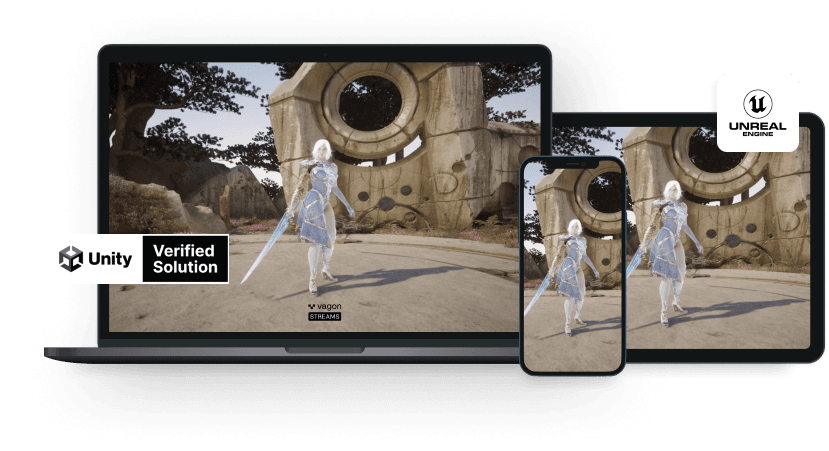
Application Streaming
Definition
The process of delivering applications over a network to be run on a local client device, providing users with remote access to applications without local installation.
Cloud Streaming Glossary · 85 terms
What is Application Streaming?
Application streaming is a method of delivering applications over a network, enabling users to access and run software without the need for local installation. Instead of installing the software directly on a device, the application is hosted on a remote server and delivered in real-time to the user. This allows users to start using the application almost immediately, as only the necessary parts of the application are streamed to the device at any given time.
Use Cases
Application streaming is particularly valuable in scenarios where flexibility, performance, and accessibility are essential:
3D Design and Rendering: Creative professionals using tools like Blender 3D, Unity, or Unreal Engine can stream these resource-intensive applications to any device, avoiding the need for high-performance local hardware.
Virtual Product Configurators: Businesses offering customizable products can stream complex configurator applications, allowing customers to interact with and modify products in real-time.
Gaming: Game developers and players can stream games directly to devices, reducing the need for local installation and allowing for instant access to a broad range of titles.
Virtual Meetings and Experiences: Streaming interactive applications for virtual meetings or events ensures that all participants can access the experience seamlessly, regardless of their device capabilities.
Benefits
Application streaming provides several key advantages that make it a preferred solution for delivering high-performance applications:
Instant Access: Users can start using the application almost immediately, without waiting for a full download and installation.
Resource Efficiency: By offloading processing to a remote server, application streaming reduces the need for high-performance hardware on the client side.
Remote Accessibility: Users can access applications from any device with an internet connection, making it an ideal solution for remote work and mobile use.
Simplified Management: IT administrators can easily update and manage applications on a central server, reducing the complexity and cost associated with maintaining software on individual devices.
Featuring Vagon Streams: Stream Powerful Applications Anywhere
For professionals and businesses that rely on high-performance applications, Vagon Streams provides an unparalleled solution. With Vagon Streams, you can stream powerful 3D design, rendering, and development tools like Blender 3D, Unity, or Unreal Engine directly to any device. This eliminates the need for expensive hardware upgrades and ensures that you have access to the full power of these applications wherever you are.
Vagon Streams not only makes application streaming more accessible but also enhances the performance and usability of your most demanding software, allowing you to focus on your work without worrying about hardware limitations.
Experience the future of application streaming with Vagon Streams. Start streaming high-performance applications today and unlock the full potential of your workflow.
Application streaming represents a significant shift in the way we think about software deployment and usage. By enabling on-demand access to powerful applications, it is paving the way for more efficient and accessible computing experiences.