Extended Reality - XR
Definition
An umbrella term that encompasses all forms of immersive digital experiences, including augmented reality (AR), virtual reality (VR), and mixed reality (MR). XR technologies blend the physical and digital worlds, offering new ways to interact with digital content and environments.
Cloud Streaming Glossary · 85 terms
What is Extended Reality (XR)?
Extended Reality (XR) is an umbrella term that encompasses all forms of immersive digital experiences, including augmented reality (AR), virtual reality (VR), and mixed reality (MR). XR technologies blend the physical and digital worlds, offering new ways to interact with digital content and environments.
Use Cases
Extended Reality (XR) is transforming various industries by providing immersive and interactive experiences:
Entertainment and Gaming: XR is widely used in gaming and entertainment to create immersive experiences, allowing users to interact with digital worlds in ways that were previously impossible.
Education and Training: XR is used in education and professional training to simulate real-world scenarios, providing learners with hands-on experience in a safe and controlled environment.
Healthcare: In healthcare, XR is used for surgical training, patient diagnosis, and treatment planning, offering new ways to visualize and interact with medical data.
Retail and E-Commerce: Retailers use XR to create virtual showrooms and fitting rooms, allowing customers to visualize products in their own space or try on items virtually before making a purchase.
Benefits
Extended Reality (XR) offers several key advantages that make it a powerful tool for innovation and engagement:
Immersive Experiences: XR provides users with a fully immersive experience, allowing them to interact with digital content in a more natural and intuitive way.
Enhanced Learning and Training: XR enables learners to practice skills and explore environments that would be difficult or impossible to access in the real world.
Improved Customer Engagement: XR allows businesses to engage customers in new and exciting ways, offering personalized and interactive experiences that drive sales and loyalty.
Innovation in Design and Visualization: XR provides designers and engineers with new tools to visualize and interact with their creations, enhancing the design process and improving outcomes.
Featuring Vagon Streams: Powering XR Experiences with High-Performance Streaming
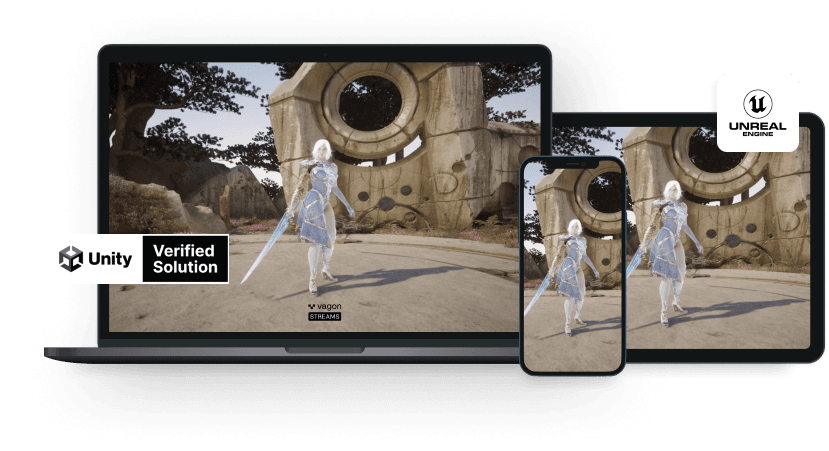
For developers and businesses looking to deliver cutting-edge XR experiences, Vagon Streams provides a robust solution that ensures high-performance streaming of XR applications. Vagon Streams enables you to stream complex XR content, such as AR, VR, and MR applications, directly from the cloud, ensuring that your users experience seamless and immersive interactions.
With Vagon Streams, you can deliver XR experiences that are both visually stunning and responsive, without the need for high-end local hardware.
Elevate your XR applications with Vagon Streams. Try Vagon Streams today and deliver immersive digital experiences with the power of cloud-based streaming.
Extended Reality (XR) is reshaping the way we interact with digital content, offering new possibilities for education, entertainment, and business. Vagon Streams enhances your ability to deliver these experiences by providing a powerful platform for streaming XR applications, ensuring that your users enjoy the highest quality interactions in a seamless and efficient way.