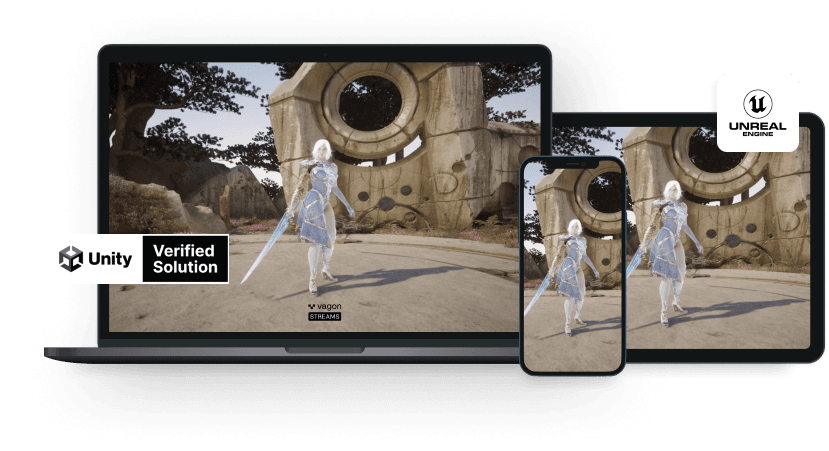
Real-time 3D
Definition
3D graphics rendered in real-time, essential for interactive applications such as video games, simulations, and virtual reality. Real-time 3D allows users to interact with 3D environments and models instantly, with immediate feedback based on their actions.
Cloud Streaming Glossary · 85 terms
What is Real-time 3D?
Real-time 3D refers to 3D graphics that are rendered instantly as users interact with them, making it essential for interactive applications such as video games, simulations, and virtual reality (VR). Real-time 3D allows users to engage with 3D environments and models with immediate feedback, creating dynamic and responsive experiences that react in real-time to user inputs.
Use Cases
Real-time 3D is pivotal in various industries where interactivity and immediate feedback are crucial:
Video Games: Game developers use real-time 3D to create immersive worlds that players can explore and interact with, ensuring smooth gameplay and realistic responses to player actions.
Virtual Reality (VR): In VR applications, real-time 3D is used to render environments that users can navigate and interact with as if they were physically present, enhancing the sense of immersion.
Simulations: Industries such as aviation, automotive, and healthcare use real-time 3D for simulations, allowing trainees to interact with realistic environments and scenarios in a controlled setting.
Architectural Visualization: Architects use real-time 3D to create interactive walkthroughs of building designs, enabling clients to experience spaces and make decisions based on real-time visual feedback.
Benefits
Implementing real-time 3D offers several key benefits that enhance user engagement and the overall experience:
Immediate Feedback: Real-time 3D provides instant visual feedback, making interactions more intuitive and engaging for users.
Immersive Experiences: By rendering 3D graphics in real-time, applications can create highly immersive environments that captivate and engage users.
Enhanced Interactivity: Real-time 3D allows for complex interactions within 3D environments, enabling users to manipulate and explore content dynamically.
Versatility: Real-time 3D can be applied across various platforms and devices, from gaming consoles to VR headsets, ensuring broad accessibility.
Featuring Vagon Streams: Elevating Real-time 3D Experiences with High-Performance Streaming
For developers and organizations that rely on real-time 3D to create interactive experiences, Vagon Streams offers a robust solution that ensures smooth and responsive streaming. Vagon Streams enables you to deliver real-time 3D applications directly from the cloud, providing users with high-quality graphics and interactions without the need for powerful local hardware.
Stream your real-time 3D applications with Vagon Streams. Try Vagon Streams today and deliver immersive 3D experiences with seamless cloud streaming technology.
Real-time 3D is revolutionizing how users interact with digital content, offering immediate and engaging experiences across various industries. Vagon Streams enhances your ability to deliver these experiences by providing a seamless platform for streaming high-performance 3D content, ensuring that your users enjoy the best possible interactions.