Render Streaming
Definition
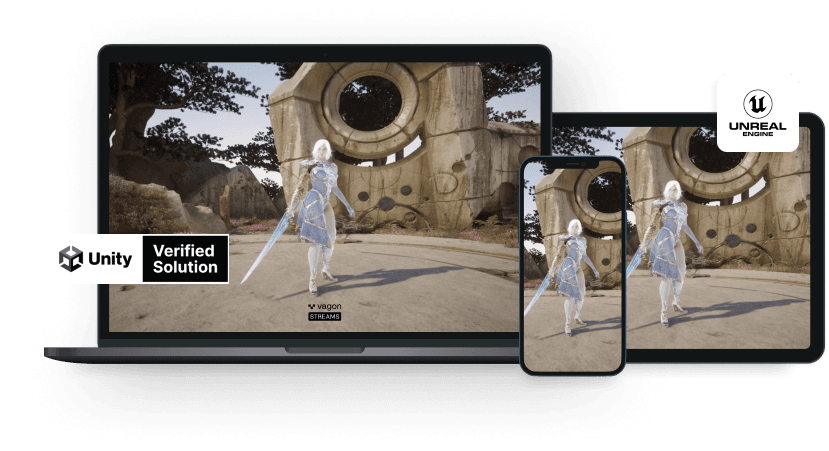
A method of streaming 3D content, typically created with engines like Unity, directly from a rendering server to end-users. Render streaming enables users to interact with high-quality 3D graphics without needing to download or install large files on their local devices.
Cloud Streaming Glossary · 85 terms
What is Render Streaming?
Render streaming is a method of streaming 3D content, typically created with engines like Unity, directly from a rendering server to end-users. Render streaming enables users to interact with high-quality 3D graphics without needing to download or install large files on their local devices.
Use Cases
Render streaming is particularly valuable in applications where delivering real-time, high-quality 3D content to a broad audience is essential:
Interactive Applications: Developers use render streaming to deliver interactive 3D applications, such as simulations, training tools, or virtual showrooms, directly to users' browsers without requiring downloads.
Gaming: Game developers leverage render streaming to allow players to experience graphically intensive games on any device, with all rendering done server-side to ensure consistent performance.
Architectural Visualization: Architects and designers use render streaming to present real-time, interactive 3D models to clients, enabling them to explore and interact with designs in a browser without needing specialized software.
Virtual Events: Event organizers use render streaming to create immersive, interactive environments for virtual conferences, exhibitions, or product launches, allowing attendees to explore 3D spaces in real-time.
Benefits
Implementing render streaming offers several key benefits that enhance the delivery and accessibility of 3D content:
Instant Accessibility: Render streaming allows users to access and interact with 3D content instantly via a web browser, eliminating the need for downloads or installations.
Hardware Independence: Users can experience high-quality 3D graphics on any device, regardless of its specifications, as all rendering is handled on the server-side.
Scalability: Render streaming can scale to accommodate a large number of users simultaneously, ensuring consistent performance and quality across diverse audiences.
Cost Efficiency: By centralizing rendering tasks on powerful servers, render streaming reduces the need for high-end local hardware, making it a cost-effective solution for delivering 3D content.
Featuring Vagon Streams: The Verified Cloud Streaming Solution for Unity
For developers and organizations that need to deliver real-time, high-quality 3D content, Vagon Streams offers a powerful solution that ensures smooth and responsive render streaming. Notably, Vagon Streams is the only verified cloud streaming solution by Unity, ensuring full compatibility and optimized performance for your Unity-based projects. This verification underscores Vagon Streams' commitment to delivering the best possible experience for your users.
With Vagon Streams, you can deliver render streaming experiences that are both high-quality and widely accessible, ensuring that your audience enjoys the best possible interaction with your 3D content.
Elevate your 3D content delivery with Vagon Streams. Try Vagon Streams today and leverage the only Unity-verified cloud streaming solution for exceptional render streaming experiences.
Render streaming is transforming how 3D content is delivered, making it accessible to a broader audience without the need for specialized hardware or software. Vagon Streams enhances your ability to leverage render streaming by providing a seamless platform for delivering high-quality 3D experiences directly from the cloud.