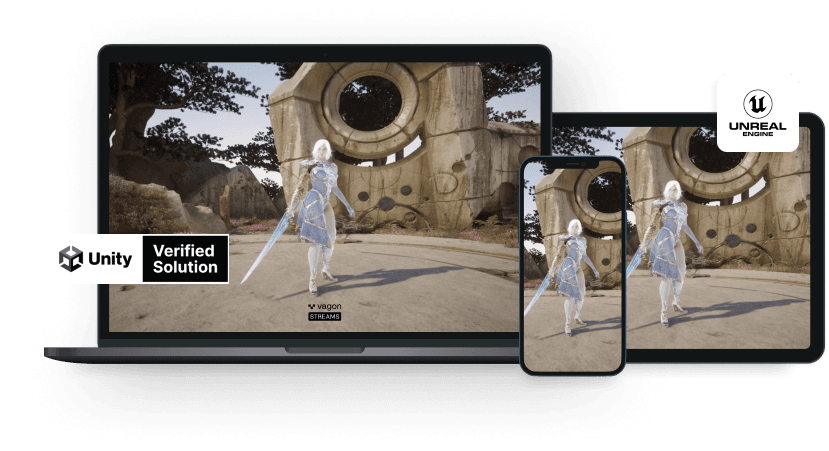
Pixel Streaming
Definition
A technology that streams high-quality 3D graphics, typically created with Unreal Engine, directly from a server to a web client. Pixel streaming allows users to interact with complex 3D content without needing powerful local hardware, as all processing is done server-side.
Cloud Streaming Glossary · 85 terms
What is Pixel Streaming?
Pixel streaming is a technology that streams high-quality 3D graphics, typically created with Unreal Engine, directly from a server to a web client. Pixel streaming allows users to interact with complex 3D content without needing powerful local hardware, as all processing is done server-side.
Use Cases
Pixel streaming is particularly valuable in scenarios where high-quality 3D content needs to be delivered to a wide audience without requiring high-end hardware:
Interactive 3D Applications: Developers use pixel streaming to deliver interactive 3D applications, such as product configurators or virtual tours, directly to users' web browsers, ensuring a smooth and immersive experience.
Gaming: Game developers leverage pixel streaming to allow players to experience graphically intensive games on any device, regardless of its processing power, by streaming the game from a powerful server.
Architectural Visualization: Architects use pixel streaming to present detailed 3D models of buildings and environments to clients, allowing them to explore designs in real-time without the need for specialized software.
Virtual Reality (VR): Pixel streaming can deliver VR experiences over the web, enabling users to access high-quality virtual environments from a browser without requiring a VR-ready PC.
Benefits
Pixel streaming offers several key benefits that enhance the accessibility and quality of 3D content:
Hardware Independence: Pixel streaming allows users to access high-quality 3D content on any device, regardless of its specifications, as all the heavy lifting is done on the server-side.
Instant Accessibility: Users can access pixel-streamed applications instantly via a web browser, eliminating the need for downloads or installations, and providing immediate access to content.
Scalability: Pixel streaming can scale to accommodate large numbers of users simultaneously, ensuring that everyone experiences the same high level of performance and quality.
Cost Efficiency: By reducing the need for high-end local hardware, pixel streaming allows organizations to deliver high-quality 3D experiences more cost-effectively.
Featuring Vagon Streams: Delivering High-Quality Pixel Streaming with Advanced Technology
For developers and organizations looking to deliver complex 3D content with ease, Vagon Streams offers a robust solution that ensures smooth and responsive pixel streaming. Vagon Streams enables you to stream 3D applications, such as those created with Unreal Engine, directly from the cloud, providing users with a seamless experience without the need for powerful local hardware.
With Vagon Streams, you can deliver pixel streaming experiences that are both high-quality and widely accessible, ensuring that your audience enjoys the best possible interaction with your 3D content.
Stream high-quality 3D content with Vagon Streams. Try Vagon Streams today and deliver pixel streaming experiences that captivate and engage your users.
Pixel streaming is revolutionizing how 3D content is delivered, making it accessible to a broader audience without the need for specialized hardware. Vagon Streams enhances your ability to leverage pixel streaming by providing a seamless platform for delivering high-quality 3D experiences directly from the cloud.