Remote Desktop Streaming
Definition
The ability to access and control a desktop environment hosted on a remote server. Remote desktop streaming enables high-performance computing tasks to be carried out on low-power devices, as all processing is performed remotely and streamed to the user’s device.
Cloud Streaming Glossary · 85 terms
What is Remote Desktop Streaming?
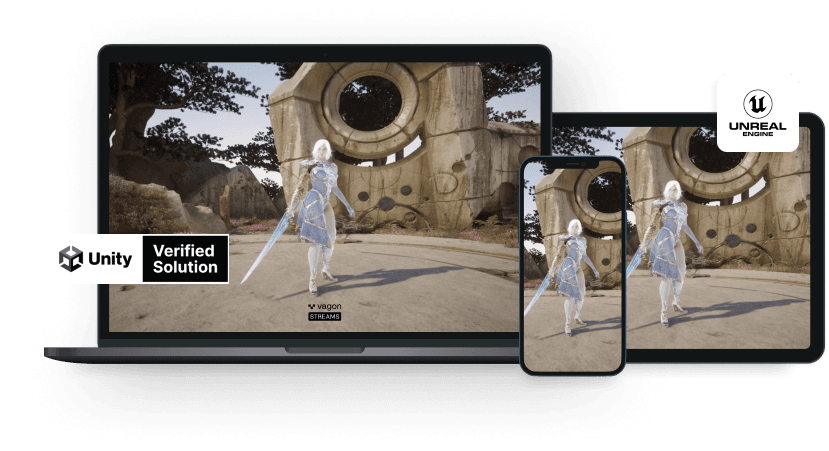
Remote desktop streaming is the ability to access and control a desktop environment hosted on a remote server. Remote desktop streaming enables high-performance computing tasks to be carried out on low-power devices, as all processing is performed remotely and streamed to the user’s device.
Use Cases
Remote desktop streaming is highly valuable in various scenarios where users need access to powerful computing resources from any location:
Remote Work: Employees can access their work desktops from home or on the go, ensuring they have the same capabilities as if they were in the office, regardless of their device's power.
Software Development: Developers can use remote desktop streaming to access powerful development environments, enabling them to compile and test code efficiently without relying on local hardware.
Graphic Design and 3D Modeling: Designers and artists can work on complex graphic and 3D projects using remote desktops, leveraging the power of high-end workstations hosted in the cloud.
Education and Training: Educational institutions use remote desktop streaming to provide students with access to specialized software and resources, enabling learning from any device.
Benefits
Implementing remote desktop streaming offers several key benefits that enhance productivity and accessibility:
Hardware Independence: Users can access high-performance desktops from any device, allowing them to perform resource-intensive tasks without the need for powerful local hardware.
Enhanced Security: All data and processing remain on the remote server, reducing the risk of data loss or theft and ensuring that sensitive information is protected.
Cost Efficiency: Organizations can reduce the need for expensive high-end hardware by centralizing resources in the cloud, enabling users to access these resources as needed.
Flexibility and Mobility: Remote desktop streaming allows users to work from anywhere, providing the flexibility to access their desktop environment and tools from any location with internet access.
Featuring Vagon Streams: Optimizing Remote Desktop Streaming for High-Performance Tasks
For professionals and organizations that require access to powerful computing resources from anywhere, Vagon Streams offers a robust solution that ensures smooth and responsive remote desktop streaming. Vagon Streams enables you to stream high-performance desktop environments directly from the cloud, allowing users to perform demanding tasks on any device without compromising on performance.
With Vagon Streams, you can deliver a remote desktop experience that is both powerful and secure, ensuring that your users have the tools they need to succeed, no matter where they are.
Enhance your remote work capabilities with Vagon Streams. Try Vagon Streams today and experience high-performance remote desktop streaming with the flexibility and security you need.
Remote desktop streaming is transforming how people work and access computing resources, providing flexibility and power in an increasingly mobile world. Vagon Streams enhances your ability to deliver these experiences by providing a seamless platform for streaming high-performance desktops, ensuring that your users can work efficiently from any location.