Unity
Definition
A powerful game engine used for creating both 3D and 2D games and simulations. Unity is widely used in game development, architecture, and other industries to build interactive experiences, offering a flexible platform with a large community and extensive resources.
Cloud Streaming Glossary · 85 terms
What is Unity?
Unity is a powerful game engine used for creating both 3D and 2D games and simulations. Unity is widely used in game development, architecture, and other industries to build interactive experiences, offering a flexible platform with a large community and extensive resources.
Use Cases
Unity is versatile and widely adopted across various industries for creating interactive and immersive experiences:
Game Development: Unity is a leading choice for developing 2D and 3D games across multiple platforms, including PC, consoles, mobile devices, and VR headsets.
Architectural Visualization: Architects use Unity to create interactive walkthroughs and visualizations of buildings, allowing clients to explore designs in a realistic 3D environment.
Education and Training: Unity is used to develop simulations and educational tools that provide interactive learning experiences, making complex concepts easier to understand.
Virtual and Augmented Reality: Unity supports the creation of VR and AR applications, enabling developers to build immersive environments and interactive experiences for various devices.
Benefits
Unity offers several key benefits that make it a preferred choice for developers across different fields:
Cross-Platform Development: Unity allows developers to build applications that can be deployed across multiple platforms with minimal changes, reducing development time and costs.
Extensive Asset Store: Unity’s Asset Store provides a vast library of pre-made assets, tools, and plugins, helping developers accelerate the development process.
Strong Community Support: Unity has a large and active community, providing ample resources, tutorials, and forums where developers can find support and share knowledge.
Flexible and Scalable: Unity is highly customizable, allowing developers to build anything from simple 2D games to complex 3D simulations and VR experiences.
Featuring Vagon Streams: Enhancing Unity Projects with High-Performance Streaming
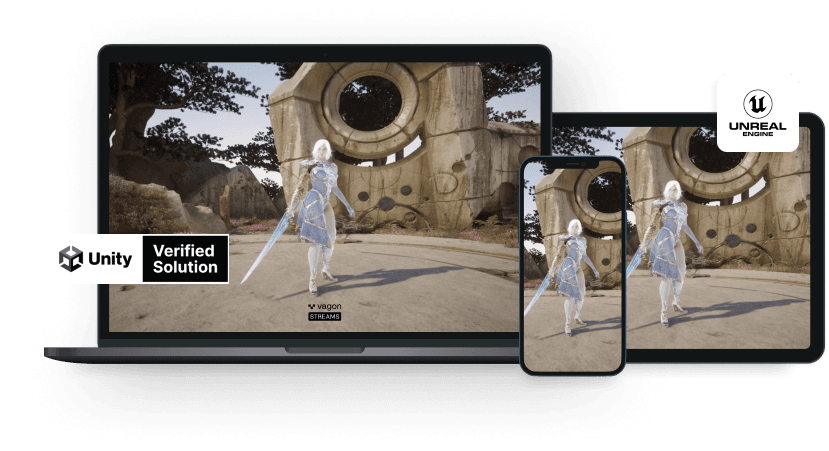
For developers and studios that use Unity to create interactive experiences, Vagon Streams offers a robust solution that enhances the development and delivery of your projects. Vagon Streams enables you to stream Unity applications directly from the cloud, providing access to high-performance computing resources and ensuring that your users enjoy smooth and responsive interactions.
As the only verified cloud streaming solution by Unity, Vagon Streams ensures that your Unity projects are delivered with optimal performance, whether you're developing games, simulations, or VR/AR experiences.
Stream your Unity projects with Vagon Streams. Try Vagon Streams today and deliver interactive experiences with seamless cloud streaming technology.
Unity is a leading game engine that empowers developers to create interactive and immersive experiences across various platforms. Vagon Streams enhances your ability to deliver Unity-based projects by providing a seamless platform for streaming, ensuring that your content is accessible and high-performing for users worldwide.