Instant Connection for Pixel Streaming
— New Feature Automated Setup

Essential Rhino 3D Keyboard Shortcuts For Faster Workflows
Architecture
Essential Rhino 3D Keyboard Shortcuts For Faster Workflows
Architecture
Essential Rhino 3D Keyboard Shortcuts For Faster Workflows
Architecture
Table of Contents
Rhinoceros is a computer program that is used for 3D modeling, which might explain why you might hear it referred to as Rhino 3D. It’s a top choice particularly because it is precise, has Grasshopper integration, and is suited for those seeking precision.
Another advantage is that Rhino 3D can be really quick to create, and that can become even faster when you have the right shortcuts stored in your mind. Do you want to know how to speed up workflow in Rhino 3D shortcuts? I’ve got your back and I’m going to show you some of the best ones to know. For those interested in optimizing speed further, check out some tips for faster rendering in Rhinoceros to take productivity up a notch.
Why Use Keyboard Shortcuts in Rhino 3D?
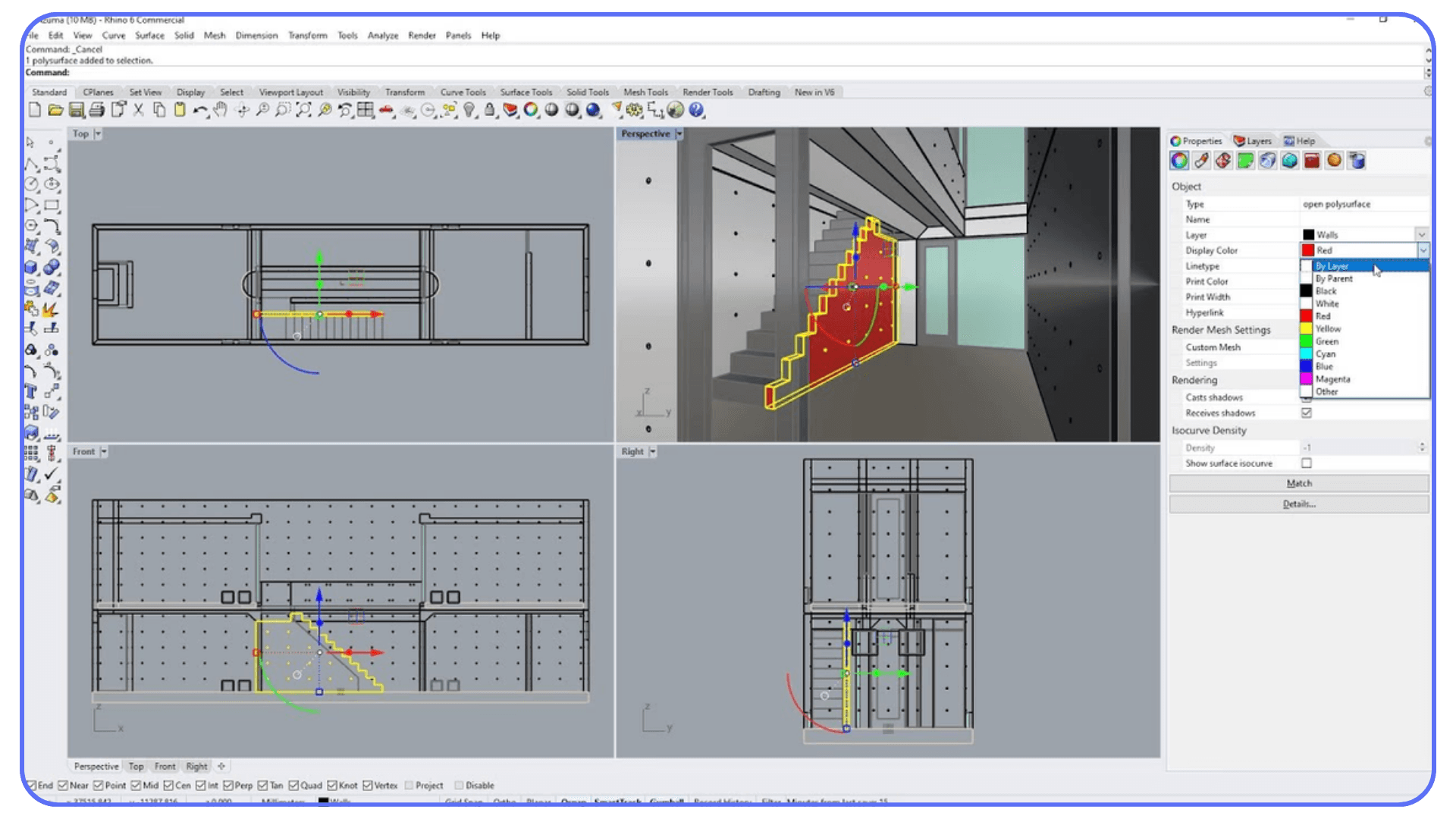
Before you dive into Rhino 3D keyboard shortcuts, it’s understandable if you ask what the point is in learning them in the first place. Good question.
Well, the first thing is that using a keyboard shortcut can save time. You don’t need to bother with as many mouse movements or dig through menus to perform an action.
At the same time, you can increase productivity with Rhino 3D shortcuts since the more time you save, the more work you can fit into one minute, one hour, or one day. You also break up your flow a lot less. Trying out Rhino 3D on a cloud computer can also boost productivity since you’re no longer limited by your device's performance. For those interested in optimizing Rhino 3D performance even further, you can check out some tips for running Rhino 3D on low-end devices for better performance.
Finally, the consistency associated with keyboard shortcuts is another reason to value them. Do you want to duplicate an object or split it in two? A shortcut will do that each time, perfectly.
Must-Know Rhino 3D Keyboard Shortcuts
If you’ve never used shortcuts in Rhinoceros but you’re interested in adding a bunch to your arsenal, this is the place to be. For those seeking ready-to-use 3D assets, here’s a collection of Rhino 3D assets that can be directly incorporated into your projects. And if you're looking to bring those models into a real-time rendering environment, this guide on exporting from Rhino to Twinmotion walks you through creating immersive visualizations with ease. I’m about to show you several of the best shortcuts for Rhino 3D. Let’s get into it.
Basic Navigation and Modeling
Being able to move around the Rhino 3D interface and the object you’re modeling is a fundamental skill. Certain Rhino 3D keyboard shortcuts can make this a lot easier. To explore the best setups, check out our guide to the best computers for Rhino 3D that handle complex modeling tasks effortlessly. Here are a few of them below:
Zoom: Ctrl + Right Mouse Drag OR Mouse Wheel
Pan: Shift + Right Mouse Drag
Pan (in Orthographic Views): Right Mouse Drag
Rotate View (in Perspective View): Right Mouse Drag
Gumball: Ctrl + Shift + G
Object Selection and Manipulation
Being able to navigate in Rhinoceros is one thing, but if you’re going to use the program effectively, there are some essential keyboard shortcuts for Rhino 3D modeling that should be at your beck and call, particularly those related to actually manipulating the 3D objects you’ve created. While working in Rhino, avoiding common issues is essential for seamless work. Here’s a guide on common Rhino 3D crashes and how to fix them.
Select All: Ctrl + A
Select Object: Left Click
Add Objects to Selection: Shift + Left Click
Duplicate Object(s): Alt + Left Mouse Drag
Undo Action: Ctrl + Z
Redo Action: Ctrl + Y
Lock Object(s): Ctrl + L
Unlock Object(s): Ctrl + Shift + L
Display and Viewport Shortcuts
If you could design a 3D model from only one perspective, that’d essentially be 2D modeling. A 3D artist or designer absolutely needs to be able to view their creation from multiple angles and being able to switch between different viewports quickly is a massive help for them. Designers often weigh their options for different modeling needs and can compare alternatives such as Rhino 3D vs. CATIA to ensure they have the best tools for their viewport work.
On top of that, you may also need to appreciate your project in different forms: from the very performance-friendly wireframe mode to the high-quality rendered mode.
Set Display Mode to Wireframe: Ctrl + Alt + W
Set Display Mode to Shaded: Ctrl + Alt + S
Set Display Mode to Rendered: Ctrl + Alt + R
Set Display Mode to XRay: Ctrl + Alt + X
Maximize the Top Viewport: Ctrl + F1
Maximize the Front Viewport: Ctrl + F2
Maximize the Right Viewport: Ctrl + F3
Maximize the Perspective Viewport: Ctrl + F4
Toggle Fullscreen Mode: Alt + Enter
Advanced Shortcuts for Rhino Power Users
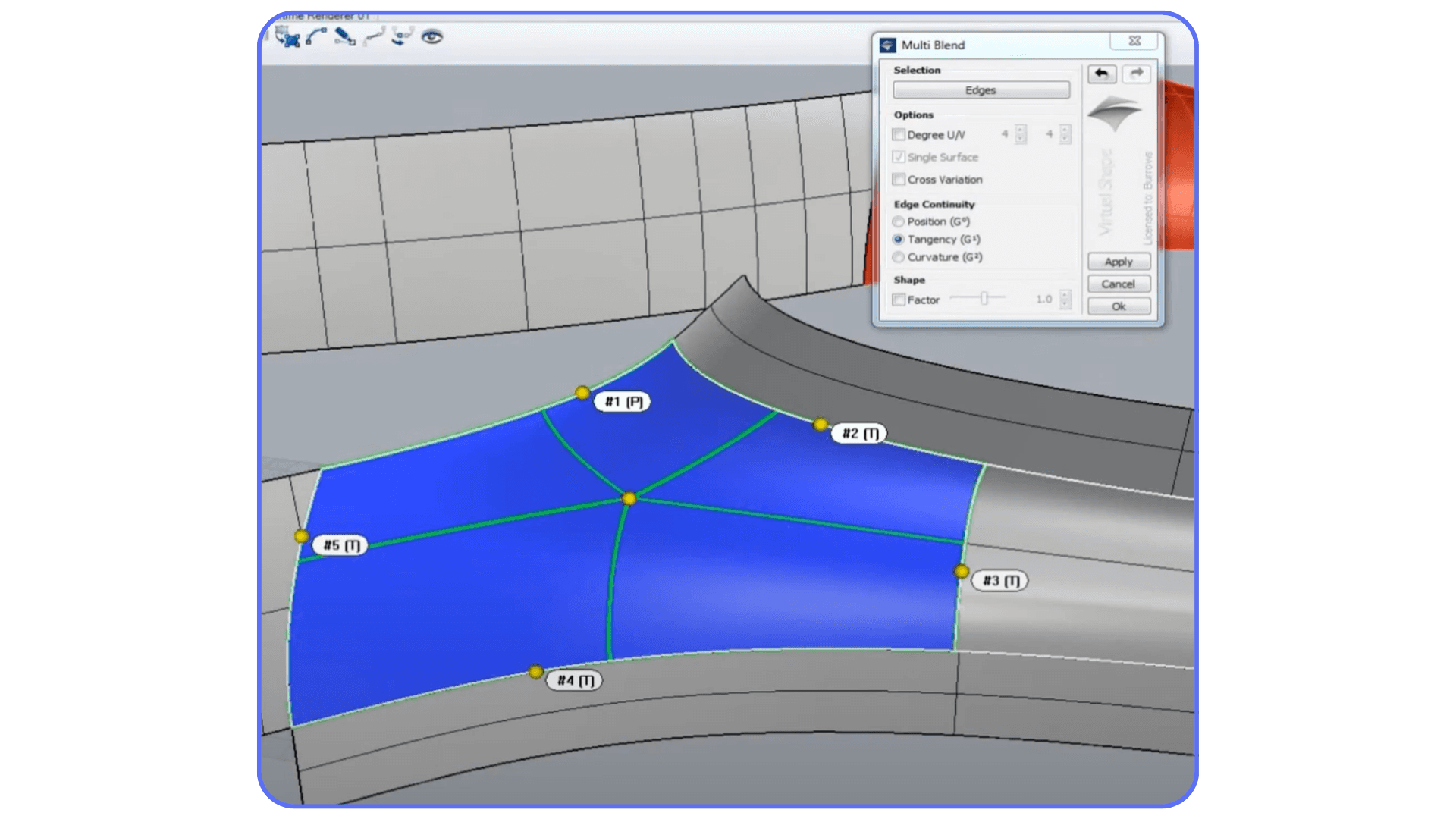
If you consider yourself to be a power user when it comes to Rhino, you’re likely in search of shortcuts which are more advanced and fit a more professional workflow. Rhino veterans often compare it to other software like Rhino 3D vs. SketchUp or Rhino 3D vs. Fusion 360 to see where each shines in advanced features. If that’s the case, here are some shortcuts that are great if you’re a more experienced user of Rhinoceros. Advanced users may also benefit from exploring top plugins for Rhino 3D that add powerful features to streamline and enhance their work.
Activate Snap Mode: F9
Activate Ortho Mode: F8
Show The Grid Axes: F7
Repeat Last Command: Right Mouse Click OR Enter
Cycle Through Viewports: Ctrl + Tab
How to Customize Rhino 3D Keyboard Shortcuts for Your Workflow
Knowing the default shortcuts is great, but the real speed gains usually come when Rhino adapts to the way you work, not the other way around. One of the most underrated features of Rhino 3D is how easy it is to customize keyboard shortcuts and create your own command triggers.
If you find yourself typing the same commands over and over or constantly clicking through menus, custom shortcuts can save a surprising amount of time.
Accessing the Keyboard Shortcut Settings
You can customize shortcuts directly inside Rhino by going to:
File → Options → Keyboard
From here, you’ll see a full list of commands and the shortcuts currently assigned to them. You can search for a specific command, assign a new shortcut, or replace one you never use.
Creating Shortcuts for Frequently Used Commands
Think about the commands you rely on most. Common examples include:
Boolean operations
Offset, Fillet, or Chamfer
Trim and Join
Grasshopper launch commands
Custom scripts or macros
Assigning short, memorable key combinations to these commands can drastically reduce how often you reach for the mouse.
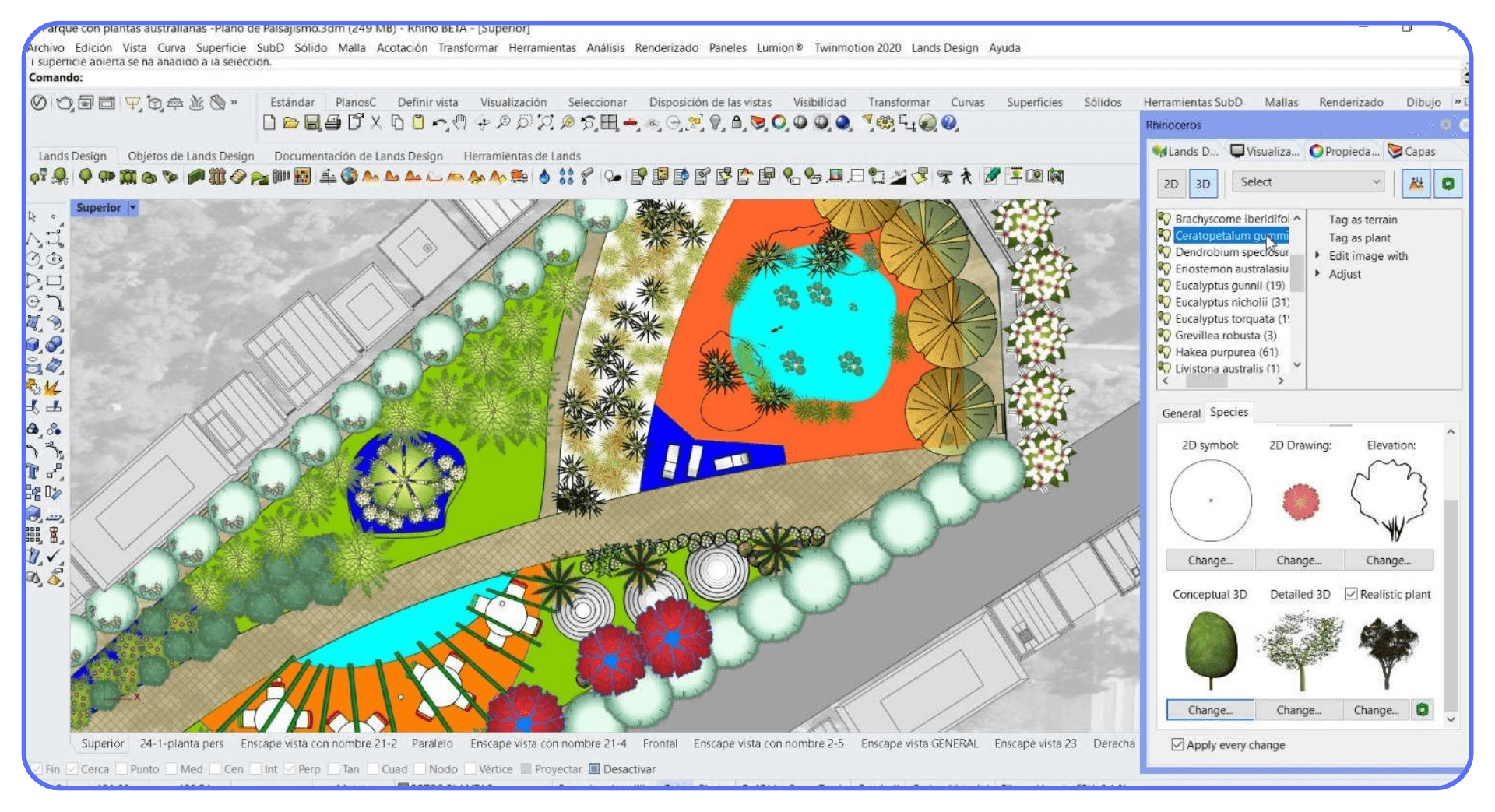
Using Aliases for Faster Command Entry
In addition to keyboard shortcuts, Rhino also allows command aliases. These let you type a short keyword that expands into a full command.
For example, you can map something like:
OF→ OffsetBL→ BooleanDifference
Aliases are especially useful if you prefer typing commands instead of remembering complex key combinations.
Pro Tip: Build Shortcuts Around Muscle Memory
The best shortcuts are the ones you don’t have to think about. Try grouping related commands near each other on the keyboard and avoid overwriting shortcuts you already use instinctively in other software.
Once you customize your shortcuts and use them consistently, Rhino starts to feel much more responsive, and your modeling flow becomes noticeably smoother.
Using Rhino 3D Shortcuts More Effectively with Vagon Cloud Computer
Keyboard shortcuts can only take you so far if Rhino itself is struggling to keep up. Laggy viewports, slow redraws, or sudden crashes can easily interrupt your workflow, no matter how efficient your shortcut setup is.
This is where Vagon Cloud Computer comes in.
Vagon lets you run Rhino 3D on powerful remote hardware, so performance-heavy tasks feel smoother even when working with complex models or large files. Commands respond faster, navigation feels more fluid, and switching between viewports is noticeably more stable.
Another benefit is consistency. Your Rhino environment, including custom shortcuts and preferences, stays the same no matter which device you’re using. You can pick up your work from a laptop, a lower-end machine, or even a different location without sacrificing speed or responsiveness.
When Rhino shortcuts are combined with reliable performance, they stop being small time-savers and start supporting a faster, more focused modeling workflow.
Conclusion
Nothing is impossible, but if you want a perfectly streamlined workflow in Rhinoceros 3D, I highly doubt you’ll get there without having keyboard shortcuts in your back pocket. Whether you’re a beginner or a veteran, keyboard shortcuts can equip you for quick navigation and applying complex techniques. For those just getting started, there are also some top Rhino 3D courses that can sharpen your skills in no time.
If you want shortcuts to stick and become a part of your repertoire, you’re going to have to use them regularly. Where better to try that out than on one of Vagon’s cloud computers? You won’t need to worry about performance or investing in a new rig when Vagon’s can do the same for an absolute fraction of the cost.
FAQs:
1. What is Rhino 3D typically used to create?
Rhino 3D is primarily used to create product designs, buildings and their interiors, jewelry pieces, vehicles, and so on.
2. What makes Rhinoceros different from other 3D modeling software?
Rhino 3D is established for its NURBS modeling and precision. Unlike many other options, it comes with the Grasshopper plugin integrated by default and also comes at a relatively inexpensive price point. Another option for those who want variety is to explore the best Rhino 3D alternatives, as each program brings unique strengths to the table.
3. Can I customize the shortcuts in Rhinoceros?
Yes, you can. Click File in the top bar, then Options, and finally Keyboard. This will show you all the currently assigned shortcuts and give you the option to customize them.
4. Is there a shortcut to create solids in Rhino 3D?
There’s no keyboard shortcut available by default that can be used to create solids in Rhino. However, you can explore the commands available to create solids such as spheres, pyramids, boxes, cones, and more.
Rhinoceros is a computer program that is used for 3D modeling, which might explain why you might hear it referred to as Rhino 3D. It’s a top choice particularly because it is precise, has Grasshopper integration, and is suited for those seeking precision.
Another advantage is that Rhino 3D can be really quick to create, and that can become even faster when you have the right shortcuts stored in your mind. Do you want to know how to speed up workflow in Rhino 3D shortcuts? I’ve got your back and I’m going to show you some of the best ones to know. For those interested in optimizing speed further, check out some tips for faster rendering in Rhinoceros to take productivity up a notch.
Why Use Keyboard Shortcuts in Rhino 3D?
Before you dive into Rhino 3D keyboard shortcuts, it’s understandable if you ask what the point is in learning them in the first place. Good question.
Well, the first thing is that using a keyboard shortcut can save time. You don’t need to bother with as many mouse movements or dig through menus to perform an action.
At the same time, you can increase productivity with Rhino 3D shortcuts since the more time you save, the more work you can fit into one minute, one hour, or one day. You also break up your flow a lot less. Trying out Rhino 3D on a cloud computer can also boost productivity since you’re no longer limited by your device's performance. For those interested in optimizing Rhino 3D performance even further, you can check out some tips for running Rhino 3D on low-end devices for better performance.
Finally, the consistency associated with keyboard shortcuts is another reason to value them. Do you want to duplicate an object or split it in two? A shortcut will do that each time, perfectly.
Must-Know Rhino 3D Keyboard Shortcuts
If you’ve never used shortcuts in Rhinoceros but you’re interested in adding a bunch to your arsenal, this is the place to be. For those seeking ready-to-use 3D assets, here’s a collection of Rhino 3D assets that can be directly incorporated into your projects. And if you're looking to bring those models into a real-time rendering environment, this guide on exporting from Rhino to Twinmotion walks you through creating immersive visualizations with ease. I’m about to show you several of the best shortcuts for Rhino 3D. Let’s get into it.
Basic Navigation and Modeling
Being able to move around the Rhino 3D interface and the object you’re modeling is a fundamental skill. Certain Rhino 3D keyboard shortcuts can make this a lot easier. To explore the best setups, check out our guide to the best computers for Rhino 3D that handle complex modeling tasks effortlessly. Here are a few of them below:
Zoom: Ctrl + Right Mouse Drag OR Mouse Wheel
Pan: Shift + Right Mouse Drag
Pan (in Orthographic Views): Right Mouse Drag
Rotate View (in Perspective View): Right Mouse Drag
Gumball: Ctrl + Shift + G
Object Selection and Manipulation
Being able to navigate in Rhinoceros is one thing, but if you’re going to use the program effectively, there are some essential keyboard shortcuts for Rhino 3D modeling that should be at your beck and call, particularly those related to actually manipulating the 3D objects you’ve created. While working in Rhino, avoiding common issues is essential for seamless work. Here’s a guide on common Rhino 3D crashes and how to fix them.
Select All: Ctrl + A
Select Object: Left Click
Add Objects to Selection: Shift + Left Click
Duplicate Object(s): Alt + Left Mouse Drag
Undo Action: Ctrl + Z
Redo Action: Ctrl + Y
Lock Object(s): Ctrl + L
Unlock Object(s): Ctrl + Shift + L
Display and Viewport Shortcuts
If you could design a 3D model from only one perspective, that’d essentially be 2D modeling. A 3D artist or designer absolutely needs to be able to view their creation from multiple angles and being able to switch between different viewports quickly is a massive help for them. Designers often weigh their options for different modeling needs and can compare alternatives such as Rhino 3D vs. CATIA to ensure they have the best tools for their viewport work.
On top of that, you may also need to appreciate your project in different forms: from the very performance-friendly wireframe mode to the high-quality rendered mode.
Set Display Mode to Wireframe: Ctrl + Alt + W
Set Display Mode to Shaded: Ctrl + Alt + S
Set Display Mode to Rendered: Ctrl + Alt + R
Set Display Mode to XRay: Ctrl + Alt + X
Maximize the Top Viewport: Ctrl + F1
Maximize the Front Viewport: Ctrl + F2
Maximize the Right Viewport: Ctrl + F3
Maximize the Perspective Viewport: Ctrl + F4
Toggle Fullscreen Mode: Alt + Enter
Advanced Shortcuts for Rhino Power Users
If you consider yourself to be a power user when it comes to Rhino, you’re likely in search of shortcuts which are more advanced and fit a more professional workflow. Rhino veterans often compare it to other software like Rhino 3D vs. SketchUp or Rhino 3D vs. Fusion 360 to see where each shines in advanced features. If that’s the case, here are some shortcuts that are great if you’re a more experienced user of Rhinoceros. Advanced users may also benefit from exploring top plugins for Rhino 3D that add powerful features to streamline and enhance their work.
Activate Snap Mode: F9
Activate Ortho Mode: F8
Show The Grid Axes: F7
Repeat Last Command: Right Mouse Click OR Enter
Cycle Through Viewports: Ctrl + Tab
How to Customize Rhino 3D Keyboard Shortcuts for Your Workflow
Knowing the default shortcuts is great, but the real speed gains usually come when Rhino adapts to the way you work, not the other way around. One of the most underrated features of Rhino 3D is how easy it is to customize keyboard shortcuts and create your own command triggers.
If you find yourself typing the same commands over and over or constantly clicking through menus, custom shortcuts can save a surprising amount of time.
Accessing the Keyboard Shortcut Settings
You can customize shortcuts directly inside Rhino by going to:
File → Options → Keyboard
From here, you’ll see a full list of commands and the shortcuts currently assigned to them. You can search for a specific command, assign a new shortcut, or replace one you never use.
Creating Shortcuts for Frequently Used Commands
Think about the commands you rely on most. Common examples include:
Boolean operations
Offset, Fillet, or Chamfer
Trim and Join
Grasshopper launch commands
Custom scripts or macros
Assigning short, memorable key combinations to these commands can drastically reduce how often you reach for the mouse.
Using Aliases for Faster Command Entry
In addition to keyboard shortcuts, Rhino also allows command aliases. These let you type a short keyword that expands into a full command.
For example, you can map something like:
OF→ OffsetBL→ BooleanDifference
Aliases are especially useful if you prefer typing commands instead of remembering complex key combinations.
Pro Tip: Build Shortcuts Around Muscle Memory
The best shortcuts are the ones you don’t have to think about. Try grouping related commands near each other on the keyboard and avoid overwriting shortcuts you already use instinctively in other software.
Once you customize your shortcuts and use them consistently, Rhino starts to feel much more responsive, and your modeling flow becomes noticeably smoother.
Using Rhino 3D Shortcuts More Effectively with Vagon Cloud Computer
Keyboard shortcuts can only take you so far if Rhino itself is struggling to keep up. Laggy viewports, slow redraws, or sudden crashes can easily interrupt your workflow, no matter how efficient your shortcut setup is.
This is where Vagon Cloud Computer comes in.
Vagon lets you run Rhino 3D on powerful remote hardware, so performance-heavy tasks feel smoother even when working with complex models or large files. Commands respond faster, navigation feels more fluid, and switching between viewports is noticeably more stable.
Another benefit is consistency. Your Rhino environment, including custom shortcuts and preferences, stays the same no matter which device you’re using. You can pick up your work from a laptop, a lower-end machine, or even a different location without sacrificing speed or responsiveness.
When Rhino shortcuts are combined with reliable performance, they stop being small time-savers and start supporting a faster, more focused modeling workflow.
Conclusion
Nothing is impossible, but if you want a perfectly streamlined workflow in Rhinoceros 3D, I highly doubt you’ll get there without having keyboard shortcuts in your back pocket. Whether you’re a beginner or a veteran, keyboard shortcuts can equip you for quick navigation and applying complex techniques. For those just getting started, there are also some top Rhino 3D courses that can sharpen your skills in no time.
If you want shortcuts to stick and become a part of your repertoire, you’re going to have to use them regularly. Where better to try that out than on one of Vagon’s cloud computers? You won’t need to worry about performance or investing in a new rig when Vagon’s can do the same for an absolute fraction of the cost.
FAQs:
1. What is Rhino 3D typically used to create?
Rhino 3D is primarily used to create product designs, buildings and their interiors, jewelry pieces, vehicles, and so on.
2. What makes Rhinoceros different from other 3D modeling software?
Rhino 3D is established for its NURBS modeling and precision. Unlike many other options, it comes with the Grasshopper plugin integrated by default and also comes at a relatively inexpensive price point. Another option for those who want variety is to explore the best Rhino 3D alternatives, as each program brings unique strengths to the table.
3. Can I customize the shortcuts in Rhinoceros?
Yes, you can. Click File in the top bar, then Options, and finally Keyboard. This will show you all the currently assigned shortcuts and give you the option to customize them.
4. Is there a shortcut to create solids in Rhino 3D?
There’s no keyboard shortcut available by default that can be used to create solids in Rhino. However, you can explore the commands available to create solids such as spheres, pyramids, boxes, cones, and more.
Get Beyond Your Computer Performance
Run applications on your cloud computer with the latest generation hardware. No more crashes or lags.

Trial includes 1 hour usage + 7 days of storage.
Summarize with AI
Ready to focus on your creativity?
Vagon gives you the ability to create & render projects, collaborate, and stream applications with the power of the best hardware.
Run heavy applications on any device with
your personal computer on the cloud.
San Francisco, California
Solutions
Vagon Teams
Vagon Streams
Use Cases
© 2026 Vagon. All rights reserved.
Run heavy applications on any device with
your personal computer on the cloud.
San Francisco, California
Solutions
Vagon Teams
Vagon Streams
Use Cases
© 2026 Vagon. All rights reserved.
Run heavy applications on any device with
your personal computer on the cloud.
San Francisco, California
Solutions
Vagon Teams
Vagon Streams
Use Cases
© 2026 Vagon. All rights reserved.